










September 6, 2026
Dog people debate facilities; cat people debate whether to leave home at all. It's a fair instinct — cats are territorial, and "my cat would hate boarding" is sometimes true. But the sitter option has real failure modes too, and they're the kind you discover mid-trip. Here's the honest comparison.
When a sitter wins
- Short trips (a night or two) with a healthy adult cat
- A cat with severe stranger- or travel-stress
- A trusted person who genuinely visits — twice a day, every day
Where the sitter model quietly fails
A 20-minute daily visit means your cat is alone about 23½ hours a day. Most cats cope; some stop eating, hide an injury, or block a litter habit — and nobody's there to notice on day one, when it's easy to fix. Sitters also cancel, forget and fall ill, and on a trip you'll mostly find out late.
When boarding wins
- Trips longer than 3–4 days — supervision hours start to matter more than territory
- Cats on medication or with any health watch-point
- Kittens and seniors, who deteriorate quickly when something's off
- Anyone who'd rather know than hope — camera-monitored care with people present all day
What a cattery must have (or don't board at all)
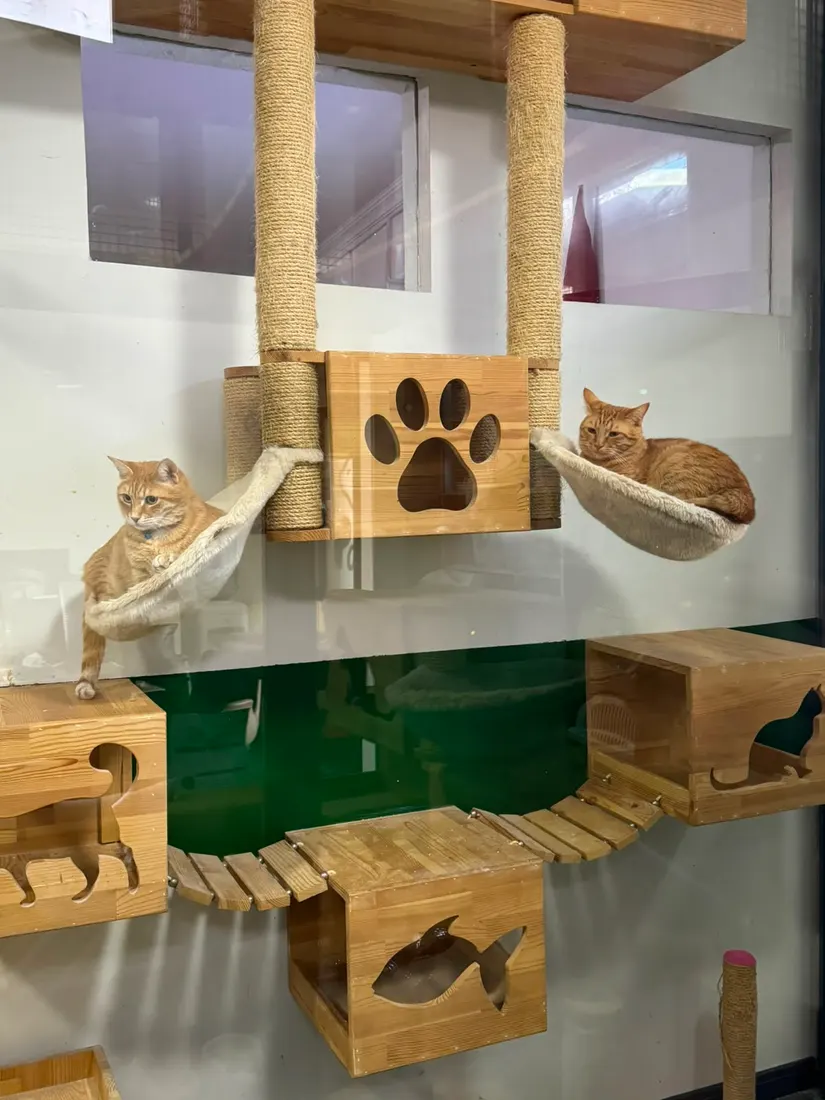
The failure mode of bad boarding is the same everywhere: cats stacked in cages within earshot of barking dogs. If you tour a facility and hear dogs from the cat room, leave. A proper cattery is a separate, quiet, dog-free space with climbing room, hiding places and unhurried people.
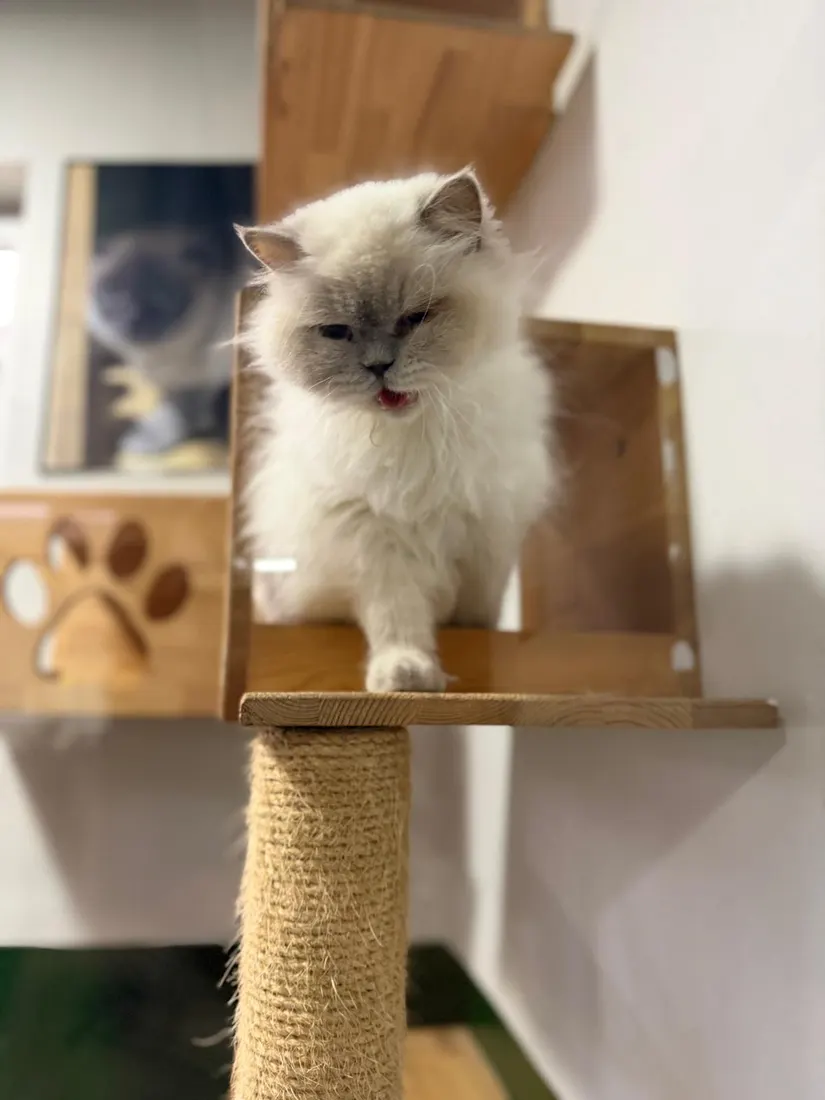
Ours is exactly that — a calm, entirely dog-free cat lounge with climbing shelves, sunny perches and gentle handling, checked on around the clock. If your cat has never boarded, ask us for a visit first; shy cats get settled in gradually.